
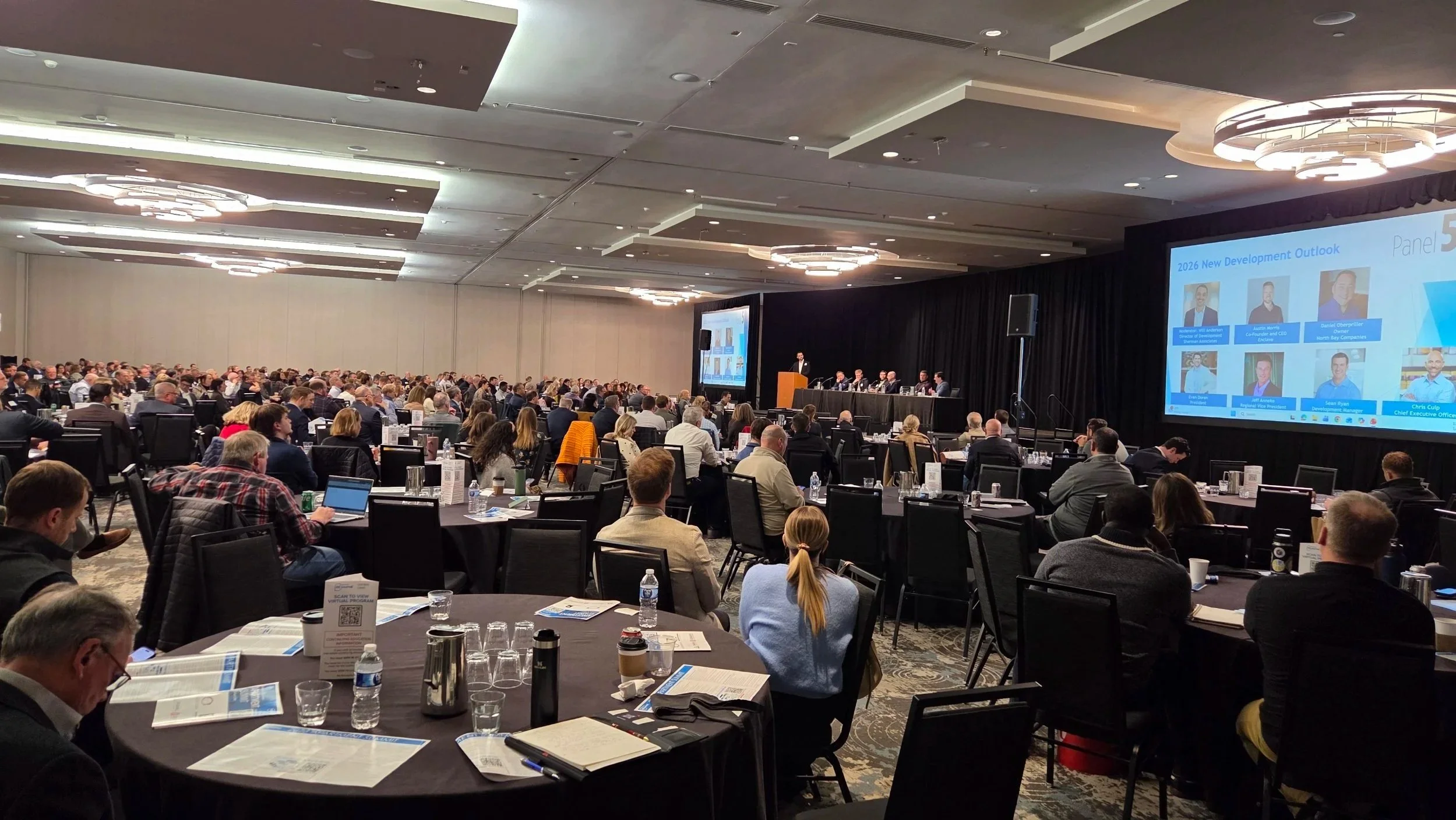
Another packed house at the 2026 MREJ Apartment Conference—and for good reason. 2025 didn’t turn out as many expected—transaction volumes were strong, but challenges in capital flow, underwriting criteria, construction costs, tariffs, inflation, all tempered optimism. Now, as we look ahead, the market for 2026 feels a lot like 2025; cautious optimism, steady, consistent, and less volatile. From stalled capital and selective equity to design trends that prioritize experience and efficiency, the conversation was clear: success in this market will require creativity, discipline, and a sharp eye – whether searching for value-add opportunities, structuring challenging capital stacks, or doubling down on operational efficiencies.
Here are some of the key takeaways shaping the Twin Cities apartment market in 2026:
✅ Investment Market Update:
2025 witnessed $2.3B in transactions. An estimated and 4K new units were delivered and projecting only 2.5k in 2026.
Rent growth in the Twin Cities is among the top 5 markets nationally—largely a result of low supply.
Value-add opportunities in 60s–80s vintage assets are gaining traction, while Class A is trading below replacement costs.
Pricing discovery is fading and buyers and sellers are more realistic; seeing more cash deals, and contracts for deeds
✅ Capital Markets & Financing Trends:
Capital flow in 2025 was more active than 2024 or 2023
Continued conservative underwriting, but lenders getting more aggressive to win business.
Apartments continue to be a preferred asset class for lenders
✅ Design & Development Outlook:
“Renters want everything” Instagram worthy building with hospitality like amenities
Amenities continue to evolve; but more thoughtful and smaller footprint design
Construction costs remain challenging, but smart design and affordability strategies are key.
Developers are focusing on location, retention, and crafting a compelling story for each asset.
Developers are playing for 2028; tertiary markets continue to be strong.
Bottom line: 2026 won’t be easy, but opportunities exist for those who stay nimble and strategic.
👉 What trends are you seeing in the Twin Cities apartment market?
Let’s connect and discuss where the next big opportunities lie. Drop your thoughts below or DM me—I’d love to hear your perspective!